
If you're selling your home in Grande Prairie this winter, the difference between a showing that goes well and one that doesn't usually isn't the house. It's the little things around it. The icy front step. The cold back bedroom. The front entry with nowhere to put your boots. A buyer who walks into a warm, bright, easy home in January is a buyer who stays a while, and that's really what this post is about.
I've been selling homes here since 2007, so I've done a lot of winter showings. The ones that go sideways almost never go sideways because of the house itself. It's the stuff that takes ten minutes to fix.
Yes, homes sell in the winter here
Every fall somebody asks me if they should just wait for spring. Sometimes the honest answer is yes. But winter buyers are a different crowd than spring buyers. Nobody tours houses at minus 25 for fun. If someone is out looking in January, it's usually because they need to move: a new job, a growing family, a lease running out.
And they're still out there. In October 2026, 68 detached homes sold in the City of Grande Prairie, and they took an average of 40 days to sell. Things slow down in December, but fewer buyers also means fewer listings competing with yours. If you want the full numbers, my latest Grande Prairie market update has them.
The showing starts at the end of your driveway
Think about how a winter showing actually goes. The buyer and their agent pull up, usually in the dark, and the first thing they do is walk from the truck to your front door. If that walk is icy, or they're climbing over a snowbank, or the agent is digging your lockbox out with bare hands, the showing is off to a rough start before anyone sees the kitchen. A buyer who just slipped on your front step is not thinking about your new countertops.
So shovel and salt the driveway, the walk and the steps, and do a quick pass again right before a showing if it snowed. Clear a path to the lockbox, and to the garage too. Garages are a big deal to buyers in Grande Prairie, a heated one even more, so make sure people can actually get in and see it.
While you're out there, look up. Big icicles hanging off the eaves, or a ridge of ice building along the edge of the roof, can mean heat is escaping into the attic. Buyers notice that. When I'm out showing homes to buyers, it's one of the first things I point out. Knock the icicles down so nobody gets hurt, and if you're seeing ice dams, it's worth finding out why before a buyer asks you.
Warm, bright and easy to walk into
Once buyers are inside, you want your house to feel like the place they'd want to be on a cold night. Mostly that comes down to heat and light.
If you turn the heat down while you're at work, turn it back up before showings. Somewhere around 20 or 21°C is about right. A chilly house feels like a drafty house even when it isn't. Walk through every room before you list, too, because that one bedroom over the garage that's always a little colder than the rest? The buyer will find it.
Light matters even more this time of year. In December the sun is down around 5:30 in Grande Prairie, so most after-work showings happen in the dark. Turn on every light in the house, the porch light and any outside lights before you leave, and swap out any burnt out bulbs, especially in the entry, the stairs and the basement. During the day, open every blind. We don't get a lot of daylight up here in the winter, so use all of it.
Then there's the boots. Every buyer who comes through is going to stand in your front entry pulling off winter boots, so make it easy on them. A good mat, a boot tray and a bit of room to stand go a long way, and a small bench is a nice touch. Wet floors are slippery and make a home look messier than it is, so give the entry a quick wipe after a busy showing day.
Yes, you can keep your Christmas tree up
Sellers ask me this every year, and the answer is yes, decorate. A tree and a few decorations make a home feel warm and lived in, and nobody expects you to skip Christmas because your house is for sale. Just keep it simple. Don't block windows, walkways or the fireplace, and if a room is starting to feel crowded, some of it can go back in the box. Outside, a string of lights looks great. The 12 foot inflatable Santa can take this year off. He'll understand.
If family is coming for the holidays, tell your REALTOR which days you want blocked off. Being for sale doesn't mean you have to have showings on Christmas Eve.
Winter photos or summer photos?
Your listing photos should be current, so the listing looks like what buyers see when they pull up. If you've got good summer photos of the yard, it's fine to add them further down the listing, as long as it's obvious they're from summer. Buyers want to know there's a deck and some grass under all that snow. They just don't want to feel tricked.
Snow hides things, so help buyers trust the house
This is the part most winter sellers don't think about. When the yard is under three feet of snow, a buyer's home inspector can't see much of the outside of the house. A snow covered roof is hard to inspect, the grading around the foundation is buried, and most inspectors won't run the air conditioner in the cold because it can damage the unit. Buyers know all of this, and it makes them a little more cautious.
You can take a lot of that worry away just by having your paperwork ready. Dig out the receipt from your last furnace service (and if it hasn't been serviced in a while, now's a good time). Know how old your roof is, and if you have a summer photo of it, even better. Pull your last 12 months of utility bills, because one of the first things winter buyers want to know is what it costs to heat the place. Add receipts for any big work you've had done. None of it is fancy, but a buyer who trusts the house writes a cleaner offer.
It works the other way too. Frost or condensation on the inside of your windows can make buyers think the windows are failing or there's a moisture problem, so wipe them down and run the bathroom and kitchen fans. And if you already know about something, a cold room or an old water stain on a ceiling from a spring melt, tell me before we list. I'd much rather deal with it up front than have it come up halfway through a deal.
Want the short version?
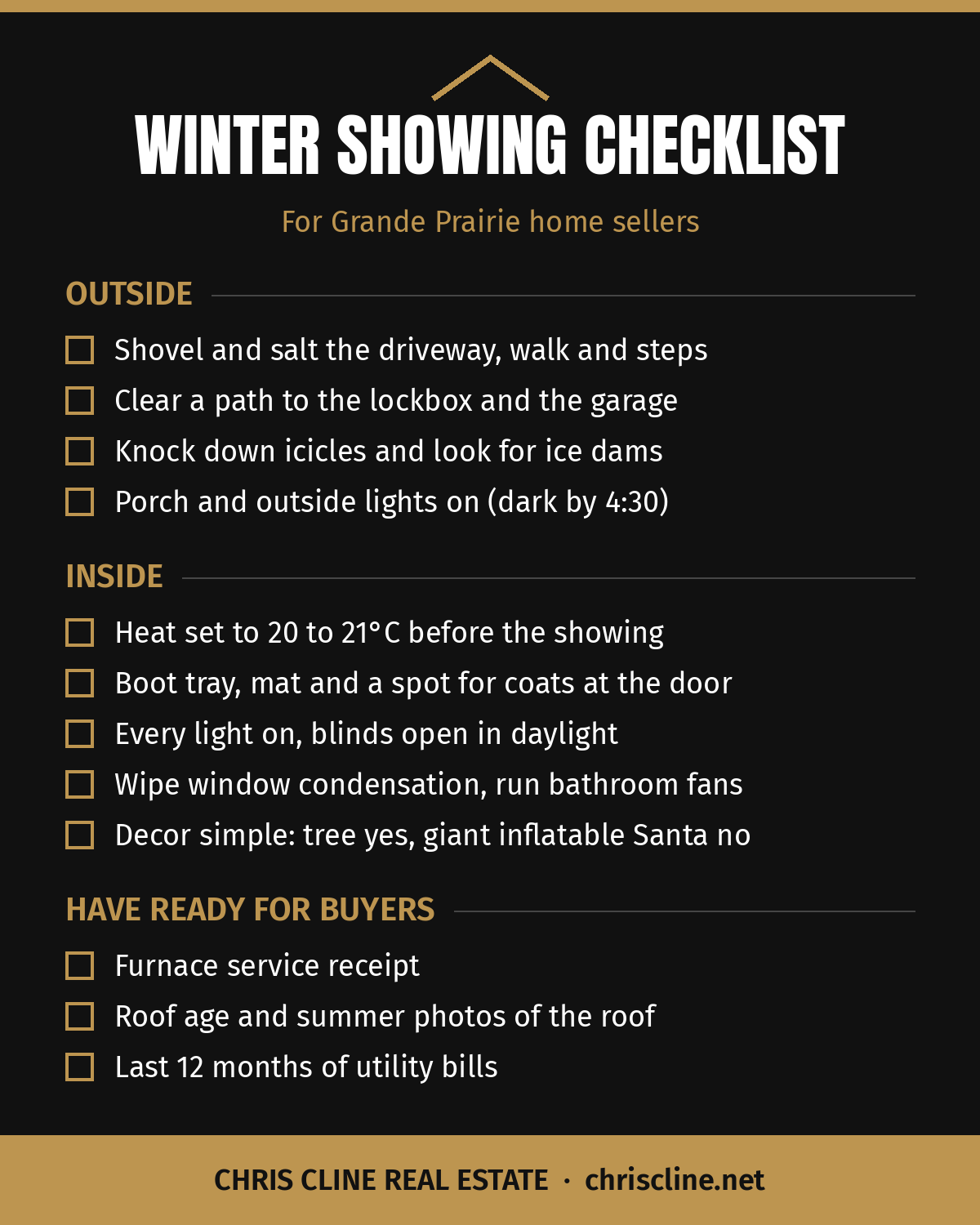
I put all of this on one page you can save, print or stick on the fridge.
Frequently asked questions
Is winter a bad time to sell a house in Grande Prairie?
No. There are fewer buyers in the winter, but there are also fewer listings, and the buyers who are out looking tend to be serious. Your situation and your price matter more than the season.
Should I be home during showings?
No. Buyers relax and take their time when the seller isn't there. Take the dog for a drive or go grab a coffee.
How warm should my house be for a winter showing?
Around 20 to 21°C, and check that every room is warm, including the basement.
Thinking about selling this winter?
If you're wondering what your home would sell for right now, I'll give you an honest number with no pressure. Get your free home evaluation or text me at 780-228-6610.
If you're still doing your homework, take a look at the latest Grande Prairie market update or my Grande Prairie neighbourhood guides. Buying instead? Check out my Grande Prairie Home Buyer’s Guide.
